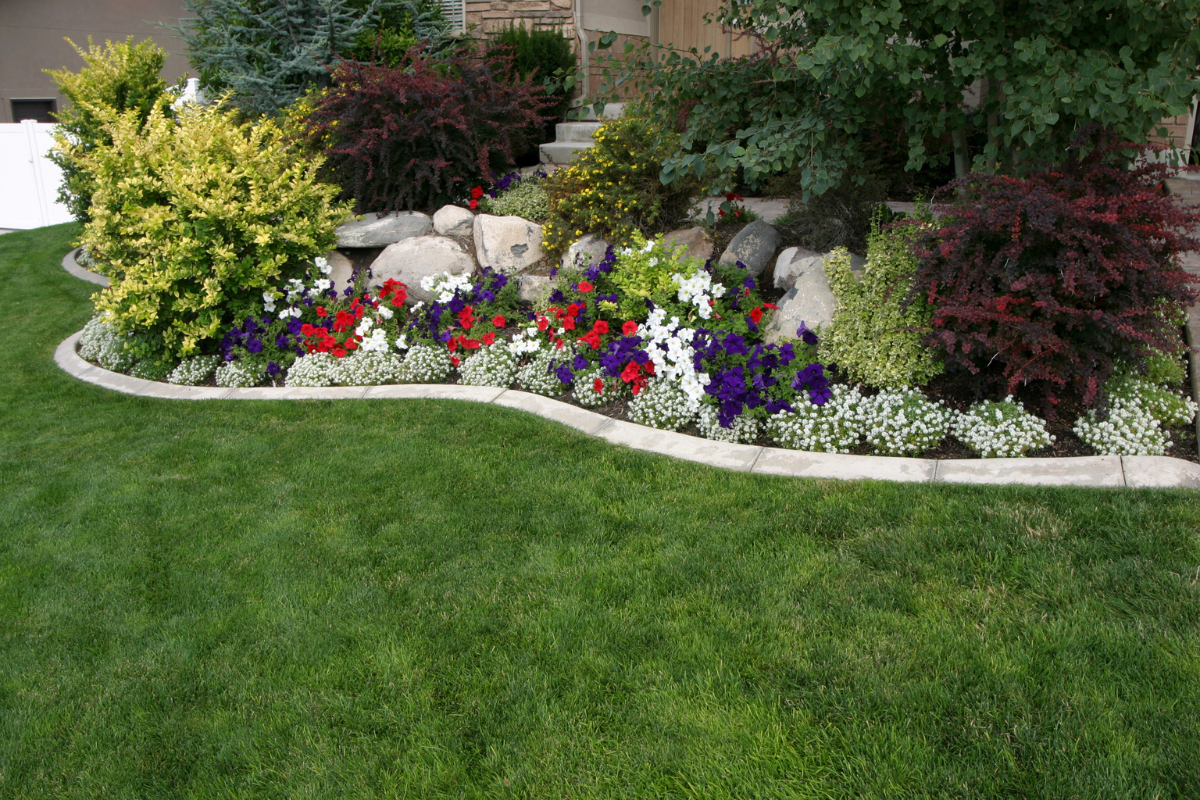
Color behaves differently outdoors than it does on a paint swatch under bright retail lights. Sun shifts, seasonal changes, and plant lifecycles keep a garden in motion, so the palette you choose at a desk rarely looks the same six months later under a low autumn sky. A good landscaping company treats color as a living material, not a static selection, and a seasoned designer learns to manage hue, value, and saturation the way a conductor handles tempo, volume, and tone. Color theory gives you the framework, but practical landscape design services turn that theory into soil-level decisions about plants, hardscape, and maintenance.
This piece distills what I have learned across years of garden landscaping, lawn care programs, and landscape maintenance services, where the palette on paper must hold up in the heat, in the rain, and under a client’s kitchen window at 7 p.m.
Why color outdoors feels louder
Outside, scale is bigger and light is stronger. A single mass of Knock Out roses reads as a billboard of red from half a block away. Highly saturated blooms overwhelm faster than they might indoors, while subtle grays and blues can vanish in midday glare. Morning and evening lengthen wavelengths, which warms colors and deepens contrast, so a pale apricot that looks modest at noon turns lush at dusk. When we plan color in landscape design services, we translate these optical realities into decisions about plant placement, quantity, and backdrop.
I often ask clients to stand at their most used vantage points before we even pick plants. What you see from a kitchen sink matters more than a rarely used corner of the yard. The same color mass may feel balanced from the porch, then oddly heavy from the driveway. Color success comes from these sightline calibrations as much as from plant lists.
The practical palette: hue, value, saturation
Hue is simply the color family, like red, blue, or green. Value is how light or dark it is. Saturation is intensity, how pure or muted the color feels. Outdoors, value does more work than people expect. Light-valued plants, like silver artemisia or white gaura, pull the eye and introduce air into heavy beds. Dark foliage, such as purple smoke bush or black mondo grass, acts as visual punctuation. Saturation must be handled with restraint. Highly saturated annuals, like petunias or calibrachoa, are best used in concentrated pockets near entries, where they greet without drowning everything.
In a front yard renovation last year, we had a client set on a “blue garden.” True blue is scarce in flora, and many plants marketed as blue lean violet. We built the scheme through value more than hue, using blue-gray fescue, slate pavers, silver thyme, and lavender, then punctuated with salvias that swing bluish in cool light. The result read unmistakably blue to the eye, not because every flower was blue, but because the surrounding grays and silvers framed the tone.
Context rules: architecture, region, and lifestyle
The house sets the key. Warm brick, terracotta roof tile, and cedar trim harmonize naturally with warm palettes: russet, coral, mustard, and olive greens. White clapboard, black windows, and concrete trend cooler, so silvers, blues, and charcoals feel coherent. Modern architecture benefits from restrained palettes and repeated blocks of color. Cottage or historic styles absorb richer mixes without chaos.
Region and site conditions dictate plant availability and performance. In mountain sun, high UV makes pale blooms glow; in humid coastal air, pastels can look washed, so deeper jewel tones hold better. Urban courtyards impose reflected heat from hardscape, which boosts evaporation and stress. A landscaping service that ignores local light and heat curves will over-prescribe colors that fade or scorch by July.
Lifestyle matters too. If a client travels frequently, complex flower sequences become liabilities. In those cases, we lean on enduring foliage color, bark, and hardscape tones, then thread in a few low-maintenance bloomers. Landscape maintenance services can handle deadheading and feeding, but it is smarter to design for resilience than to handcuff a garden to a tight pruning calendar.
Designing a palette that holds through the year
The garden’s color story should unfold across seasons, not just pop in May. A 12-month schedule avoids flat intervals and gives the eye a predictable rhythm.
Start with four anchors:
- Evergreen structure for winter continuity: boxwood, podocarpus, holly, pine, or a clipped yew hedge. Foliage color that persists beyond bloom: blue fescue, heuchera in caramel or burgundy, golden hakone grass, variegated euonymus. Bark and stem interest: redtwig dogwood, paperbark maple, river birch, ninebark with peeling layers. Hardscape tone: gravel color, mulch, stone, paint on fences or sheds.
With anchors in place, layer in seasonal pulses. Early spring can carry cool whites and blues that read clean against bare branches: hellebores, muscari, daffodils in cream, and brunnera. Late spring to early summer supports richer saturation: salvia, peonies, catmint. Mid-summer often requires a value pivot, introducing airy whites and silvers to counterheat: gaura, Russian sage, white echinacea. Autumn brings ember tones and seed heads: rudbeckia, asters, ornamental grasses. Winter leans on structure and bark, paired with evergreen variegation for light.
A common rookie error is over-relying on spring bulbs and then falling into a green void in July. At least one plant group should peak each season. If your salvia are tired by late summer, your grasses and sedums should be cresting. In practice, we map bloom windows on a quick spreadsheet, then tweak to avoid dead zones longer than four weeks.
The backbone of green
Green is not absence of color. It is the ground note against which other hues vibrate. Greens vary wildly: blue-green juniper, lime green spirea, deep forest yew. Mixing too many greens without intent muddies the picture. Pick a dominant green temperature. Blue-green reads cool and modern, especially with gray stone. Yellow-green feels lively and pairs well with clay brick and tan gravels. Once a base tonality is chosen, bring in one contrasting green to add depth, but keep the rest aligned.
Grass turf adds another swath of green. Lawn care influences color quality more than clients expect. A stressed lawn with summer dormancy turns the entire palette dull. Proper mowing height, seasonal fertilization, and irrigation tuning maintain a consistent green that supports the surrounding beds. Good lawn care is a color decision as much as a maintenance one.
Balancing complements on the wheel
Complementary pairs sit across the color wheel: red and green, blue and orange, yellow and purple. Outdoors, pure complements can scream if used at equal saturation and acreage. The trick is to lean one way with saturation or value and use the complement as an accent.
Purple alliums above a sea of green boxwood read elegant, not noisy. A cobalt glazed pot in a bed of orange daylilies can tip toward gaudy unless you dull the orange with apricot and copper foliage, then repeat the blue in smaller echoes like agapanthus. With complements, scale and repetition tame contrast.
Analogous schemes, where you cluster neighboring hues like yellow, yellow-green, and green, offer calm continuity. We often default to analogous palettes near bedrooms or reading patios, saving higher-contrast beds for entryways where energy is welcome.
Sun, shade, and the way light edits color
Sun corrects color harshly. Bright reds hold, pale pinks blow out. Shade compresses contrast and cools tones. In full shade, white and chartreuse carry farther than saturated blues. Blues recede even in the sun, which can be helpful for depth but deadly if used exclusively in a deep shade bed. A shaded north side that relies entirely on blue hostas and purple heuchera can turn muddy. Break it with a narrow ribbon of white, silver, or lime: lamium, ferns with variegation, or white astilbe.
Dappled light plays best with layered foliage texture rather than heavy bloomers. In a mature maple understory, I prefer a gradient from deep greens near the trunk to sparkles at the drip line: evergreen hellebores, then tiarella, then Japanese forest grass at the edge. Flowers appear, but they are not the main act; the color story is value shift.
Flowers fade, foliage pays the bills
A bed built on foliage color performs longer with less fuss. Variegated leaves, burgundy and chocolate tones, silvers, and golds carry through months. Blooms are the weekend guests. Heuchera in three values, paired with blue fescue and a silver artemisia, gives a steady piano line, then salvias and daylilies take solos and step back.
Foliage also teaches restraint. If you have a golden threadleaf cypress already delivering yellow, you do not need a fleet of yellow coreopsis nearby. Spread the value across the space to lead the eye, not stack it in one corner.
Hardscape as the quiet color
Stone, gravel, brick, metal, and wood form the palette’s canvas. They set temperature and value under every sky. Clients tend to choose hardscape by texture or cost, then discover the long tail of color. Buff limestone warms a space, pulling plants toward peach, rust, and olive. Cool gray pavers ask for blues, whites, and deep greens. Charcoal composite decks intensify plant saturation and can make red flowers electric.
When a landscaping company revisits a property that feels “off,” we often alter hardscape tone before touching plants. A simple switch from red mulch to dark brown or a pea gravel topdress in a cooler gray can harmonize clashing beds better than ripping out perennials. Color corrections at the base layer save money and reduce waste.
Repetition and rhythm
Color without repetition is noise. Repeating a hue in three places creates a visual chord. In a long border, I place a signature color plant roughly every 8 to 12 feet, adjusting for plant size and sightlines. The repeats can be the same plant or cousins in the same hue family. If you start with purple salvia, echo with alliums and a purple smoke bush. The effect is cohesive but avoids monotony.
Rhythm comes from spacing and value pacing. Dark-light-dark across a bed sets a beat that reads even at a glance from the street. On a recent streetscape for a commercial client, we alternated blue oat grass with white gaura and dark loropetalum. The trio repeated down the block, surviving heat and limited irrigation while keeping the brand’s cool-toned palette intact.
Scale and quantity: how much is enough
Color needs to be sized to the space. A single 1-gallon salvia in a 30-foot border is a whisper the wind will swallow. Plant in masses proportionate to the viewing distance. At 20 feet, a mass should be at least 3 feet wide to register. For perennials under 18 inches tall, groups of 5 to 9 read as a unit. For shrubs, 3 to 5 often suffice.
We also weight color by destination. Near entries and patios, higher intensity and tighter spacing make sense. In background beds, dial down saturation and increase foliage mass. Think of your landscape as a room with layers: foreground jewelry, middle-ground furnishings, background architecture.
Containers as color levers
Containers let you change the palette without uprooting beds. They also pull focal points toward people. A cobalt pot next to a neutral doorway delivers a strong cue. In a hot southwest exposure, pair that pot with drought-tough silver and white plants that keep the blue crisp: dichondra Silver Falls, white vinca, and a spike of blue salvia. In shade, switch to chartreuse sweet potato vine and white impatiens to read under low light.
Container soil fertility affects saturation and vigor, often outpacing in-ground neighbors. A landscape maintenance services crew that refreshes potting mix annually, checks drainage, and schedules a light weekly feed keeps the color honest all season.
Seasonal swaps, not seasonal whiplash
Seasonal change is where color theory meets logistics. In many regions, pansies and violas take over beds in fall, then cede to warm-season annuals in late spring. The handoff can feel jarring if the palette lurches from deep violet and gold to hot magenta overnight. Bridge with perennials whose foliage spans seasons: evergreen grasses, heuchera, or variegated liriope. Keep one hue in common between seasons, like a thread that ties the wardrobe together.
Clients who host holidays benefit from subtle shifts. For a client who entertains in September and December, we kept a base of silvers and dark greens in beds, then swapped accent colors: burnt orange chrysanthemums and copper pumpkins in fall, white cyclamen and cut conifer boughs in winter. The structure stayed constant. The accents felt intentional, not hasty.
Irrigation and nutrition: the unglamorous color controls
Water stress distorts color faster than any design flaw. Petunias fade to washed edges, hydrangea blushes brown at the tips, and foliage loses gloss. Drip irrigation tailored to plant groups preserves pigment. High-sun annuals want frequent, shallow adjustments to cool roots and encourage flowering. Deep-rooted shrubs prefer less frequent, deeper cycles. Mixing both on one zone yields color inconsistency.
Nutrition influences saturation. Too much nitrogen pushes green foliage at the expense of bloom. For flower-forward beds, a balanced or bloom-leaning fertilizer used sparingly supports color without turning plants into leafy teenagers. Soil tests prevent overcorrection. I have corrected more pale gardens by adjusting pH and micronutrients than by tinkering with plant lists.
Color for function: wayfinding, privacy, and calm
Color can guide and calm. Near steps and grade changes, contrast reduces trips. A pale groundcover against a dark riser reads clearly at night. For privacy edges that neighbors will see, diplomacy helps. Cool, restrained palettes with layered greens and white flowers sit better across property lines than hot, saturated mixes that shout.
Therapeutic gardens rely on soft value shifts, repeated forms, and gentle color pulses. Veterans and hospital gardens often avoid high-contrast reds and oranges, leaning on blues, silvers, and whites that lower perceived temperature and heart rate. In schools, we deploy practical bright accents near entries for energy, but keep classroom-adjacent courtyards calmer.
Common mistakes and how to sidestep them
- Chasing novelty over structure. New plants seduce. Without a stable base of evergreens and enduring foliage color, the palette unravels by August. Overmixing saturation. If everything shouts, nothing speaks. Pick one or two saturated accents and let the rest soften. Ignoring light. Plants labeled “blue” often turn violet in warm light. Test a few in the intended site before buying en masse. Skipping a winter plan. Bark, berries, evergreen texture, and hardscape tone must carry four months in many climates. Neglecting maintenance alignment. A high-bloom, high-deadhead design without an aligned landscaping service schedule will look tired quickly.
How professional landscape design services apply color on real projects
A reputable landscaping company begins with an assessment of architecture, hardscape, and sightlines, then builds a color narrative that respects maintenance realities. On a mixed-use commercial project, our team documented four primary approaches a client might see over a year: brand-aligned spring cools, energetic summer highlights, warm autumn transitions, and structured winter clarity. The brand’s hex values guided pot color and seasonal annuals, while shrubs and grasses delivered the long arc.
Residentially, we calibrate by room. A south-facing patio might get a triad of white, silver, and one saturated accent like coral. The north side receives whites and limes for visibility. The front walk uses repeated cool blues and dark greens for a modern home, avoiding color noise against black-framed windows. Lawn care maintains a consistent green field, and garden landscaping crews monitor bloom cycles so the plan continues to sing.
The best color plans account for attrition. Plants die or underperform. The palette should be resilient, with backups that slot in without breaking harmony. If a cool-toned bed loses Russian sage to winter kill, lavender or perovskia ‘Rocketman’ can step in. Keep a short bench of alternates on the plan so replacements happen quickly.
Working with constraints: HOA rules, deer, and water use
Many neighborhoods limit front yard color intensity or require native plant percentages. You can still build a nuanced palette. In deer country, lean on aromatic silvers and grays that deer dislike: lavender, artemisia, rosemary, nepeta. These plants also articulate cool palettes cleanly. In dry regions, water-smart choices like salvia greggii, penstemon, and blue fescue maintain color with low irrigation, supported by gravel mulch that sets a cool ground note.
Where HOAs restrict annuals, use deciduous shrubs with strong seasonal color shifts, like spirea that flushes copper, or hydrangea paniculata varieties that age from white to antique rose. The show comes from structure, not massed bedding.
Measuring success without guesswork
Color is subjective, but you can measure performance. Take photos from established viewpoints monthly at similar times of day. Drop them into a https://beckettquao297.iamarrows.com/budgeting-for-a-landscaping-service-cost-breakdown simple slide deck. Patterns emerge: gaps, overgrowth, or areas where annuals feel underfed. Clients appreciate data that shows the garden’s arc. We have converted skeptical property managers by presenting a year of consistent blues and silvers along a corporate frontage, then correlating that to reduced reactive maintenance calls. It is not that the color alone did the work, but a coherent palette often accompanies a coherent maintenance plan.
When to bring in a pro
A mature color plan compresses many decisions and saves money through fewer misfires. Professional landscape design services run plant trials, know which cultivars keep color in your microclimate, and coordinate irrigation and pruning to protect the palette. If your garden battles are chronic — perennials that fry by mid-July, front entries that feel chaotic, a patio that sits empty because it seems harsh in afternoon light — a designer can rebuild the structure and set a maintenance cadence that keeps color steady.
Ask potential partners how they think about value and saturation across seasons, what their replacement strategy is, and how their landscaping service integrates lawn care with bed health. Look for portfolios that show year-round photos, not only peak spring. Continuity is the success metric.
A few field-proven combinations
These are not prescriptions, just sets that have held up across sites and seasons:
- Cool modern entry: dark green boxwood, blue oat grass, white gaura, charcoal pots with blue salvia and dichondra, gray gravel. Warm classic front walk: yew hedging, caramel heuchera, peach daylilies, catmint, copper-flecked mulch, terracotta pots with coral calibrachoa. Low-water west bed: Russian sage, blue fescue, white yarrow, apricot penstemon, silver artemisia, crushed granite path. Shade court: Japanese forest grass, hellebores, tiarella, variegated brunnera, white astilbe, soft black mulch to lift the greens. Four-season anchor: boxwood bones, river birch for bark, ninebark for spring flush and seed heads, panicle hydrangea for summer to fall, underplanted with bulbs and white echinacea.
Each set relies on foliage and hardscape to stabilize color, with flowers adding moments rather than carrying the whole load.
The quiet discipline behind vibrant gardens
Good landscape color looks effortless, but it is built on disciplined choices. Limit saturation, repeat with intention, mind the light, and give foliage the lead. Tie hardscape into the palette so the garden reads in February as well as June. Coordinate lawn care so your green foundation stays clean. And design for the people who live there, not just for a camera in May.
Color in the landscape is a moving conversation between sun, stone, soil, and season. When a landscaping company treats it that way, every maintenance visit reinforces the story, and every year adds depth rather than drift. The result is a garden that feels right at a glance, then rewards a second look with layers you only notice because the color brought you there.
Landscape Improvements Inc
Address: 1880 N Orange Blossom Trl, Orlando, FL 32804
Phone: (407) 426-9798
Website: https://landscapeimprove.com/